
Saint Patrick Facts
St. Patrick is one of the most celebrated saints in the world, yet many people know surprisingly little about the man behind the holiday. Was he really Irish? Did he actually drive snakes out of Ireland? And how did he become such a global icon?
Every March 17, millions wear green, attend parades, and celebrate Irish culture. But the story of St. Patrick begins centuries earlier with kidnapping, slavery, faith, and a mission that changed Ireland forever.
In this guide, we’ll explore the history, legends, and lasting impact of St. Patrick. We’ll separate fact from myth as we uncover the fascinating life behind St. Patrick’s Day.
Who Was St. Patrick?
Saint Patrick is the patron saint of Ireland and one of the most recognized religious figures in the world. Yet the man behind the holiday was far more complex than the cheerful green imagery associated with March 17.
He was a 5th-century Christian missionary and bishop credited with helping spread Christianity throughout Ireland. Over time, stories about his life blended with legend, making it difficult to separate fact from folklore. What is clear is that Patrick’s influence shaped Irish religious life for centuries and eventually inspired a global cultural celebration.
Though honored as Ireland’s spiritual father, he was not Irish by birth. His life story includes kidnapping, slavery, spiritual awakening, missionary work, and deep personal conviction — all of which contribute to his enduring legacy.
Where and When Was St. Patrick Born?
When was St. Patrick born?
St. Patrick was born around AD 390 in Roman Britain, although historians debate the exact date and location. Most scholars place his birth in the late 4th century during the Roman occupation of Britain. Precise records from that era are scarce, so the commonly accepted date remains an educated estimate.
Where was St. Patrick born?
St. Patrick was born in Roman Britain, not Ireland. The exact location is unknown, but scholars suggest it may have been in present-day England, Scotland, or Wales. In his own writings, Patrick referred to his home as “Bannavem Taburniae,” a place historians have yet to identify with certainty.
Patrick was born into a Romano-British family. His father, Calpurnius, was a deacon and local official, and his mother was Conchessa. Despite his religious upbringing, Patrick later admitted that he was not particularly devout in his youth.
That changed dramatically at age sixteen.

What Did St. Patrick Do in Ireland?
What did St. Patrick do?
St. Patrick is best known for spreading Christianity throughout Ireland in the 5th century. After escaping slavery and returning home, he later felt called to return to Ireland as a missionary. There, he baptized converts, ordained priests, and helped establish Christian communities across the island.
As a teenager, Patrick was kidnapped by Irish raiders and taken to Ireland, where he spent six years enslaved as a shepherd. During this time, he turned deeply to prayer and experienced what he described as a spiritual transformation.
After escaping and returning home, he studied Christianity and eventually became a bishop. Years later, he reported having a vision in which the Irish people called him back. Believing this was God’s will, he returned to Ireland — not as a slave, but as a missionary.
Patrick traveled widely, baptizing thousands and organizing church communities. Though Ireland already had some Christian presence, Patrick’s efforts greatly expanded and strengthened the faith across the island.
Did St. Patrick Really Drive Out the Snakes?
Did St. Patrick drive out the snakes?
Legend says St. Patrick drove all the snakes out of Ireland by banishing them into the sea. However, scientists note that post-Ice Age Ireland likely never had native snake populations. Most historians believe the story is symbolic, representing Patrick driving out pagan practices rather than literal reptiles.
The snake legend is one of the most famous stories about Patrick. According to tradition, he stood on a hilltop and commanded the snakes to leave Ireland forever.
Modern science, however, tells a different story. Ireland’s climate and geographic isolation after the Ice Age made it unlikely that snakes ever inhabited the island.
Many scholars interpret the “snakes” as symbolic of pagan religions or evil influences that Patrick sought to replace with Christianity. Whether literal or symbolic, the story remains a powerful part of Irish folklore.
The Shamrock and the Trinity
The shamrock is closely associated with St. Patrick. Legend holds that he used the three-leaf clover to explain the Christian concept of the Holy Trinity: Father, Son, and Holy Spirit.
The plant grows abundantly across Ireland, making it a simple and relatable teaching tool. By pointing to its three leaves united on one stem, Patrick could illustrate how three persons could exist in one God.
Though historians debate whether this teaching method actually occurred, the story has endured. By the 18th century, wearing shamrocks on March 17 had become customary in Ireland.
Today, the shamrock remains one of Ireland’s most recognizable symbols and is deeply tied to St. Patrick’s Day celebrations worldwide.
Looking for something festive? Browse our collection of Irish blessings.
St. Patrick’s Cathedral (Dublin and New York)
St. Patrick’s Cathedral was founded in 1191 and stands as Ireland’s largest cathedral. It serves as the National Cathedral of the Church of Ireland and hosts important ceremonies and public events.
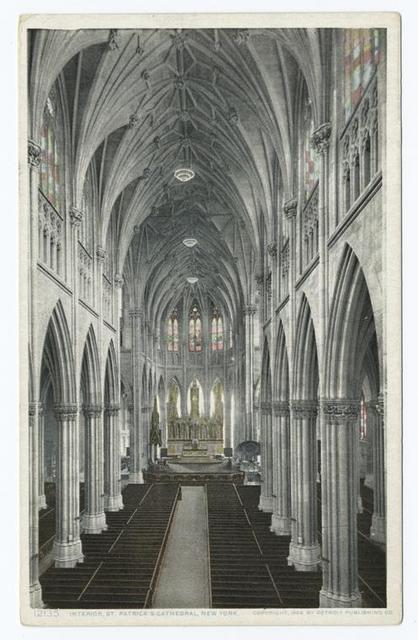
Across the Atlantic, St. Patrick’s Cathedral is one of America’s most iconic churches. Completed in 1878, this Neo-Gothic Roman Catholic cathedral dominates Fifth Avenue in Manhattan and serves as a symbol of Irish-American heritage.
Both cathedrals reflect Patrick’s lasting influence — not only religiously but culturally.
Here’s an old postcard image of St. Patrick’s Cathedral in NYC.
St. Patrick’s Breastplate Prayer
“St. Patrick’s Breastplate” is a prayer traditionally attributed to Patrick. Also known as “The Deer’s Cry” or “The Lorica,” it is a prayer of protection invoking Christ’s presence in every aspect of life.
Though historians debate its authorship, the prayer became deeply embedded in Irish Christian tradition. It has inspired hymns, musical adaptations, and modern devotional practices.
The prayer’s enduring message emphasizes spiritual strength, divine protection, and unwavering faith — themes central to Patrick’s legacy.
Words play an important role in Irish culture. Discover more interesting Irish sayings to find out more.
St. Patrick’s Day Explained
Saint Patrick’s Day is observed annually on March 17, the traditional date of Patrick’s death in AD 461.
Originally a religious feast day in Ireland, it commemorated Patrick’s life and missionary work. Over time, the celebration expanded beyond religious observance to become a broader cultural holiday honoring Irish heritage.
In Ireland, it is a national holiday. Around the world, it is marked by parades, music, festivals, and gatherings celebrating Irish identity.
Why Do We Wear Green on St. Patrick’s Day?
Why do we wear green on St. Patrick’s Day?
Green became associated with Ireland due to its lush landscape and nickname, “The Emerald Isle.” Although blue was originally associated with St. Patrick, green gained popularity in the 17th century (although some experts believe it was the 18th century). Folklore later added that wearing green makes you invisible to mischievous leprechauns who might pinch you otherwise.
Green also symbolized Irish nationalism during periods of political struggle. By the 19th century, it had become firmly connected to Irish pride.
Today, wearing green is one of the simplest and most widespread St. Patrick’s Day traditions.
St. Patrick’s Day in America
Irish immigrants brought St. Patrick’s Day traditions to the United States. Over time, the holiday became a major celebration of Irish-American identity.
Cities like New York, Boston, and Chicago host massive parades and public festivities. In Chicago, the river is famously dyed green each year.
What began as a religious feast evolved into a broader cultural celebration. For many Americans, the holiday is as much about community and heritage as it is about history.
Need something to write on a card? See our St. Patrick’s Day messages.
Traditional St. Patrick’s Day Food
Classic Irish-American dishes often appear on March 17:
Corned beef and cabbage
Corned beef and cabbage is an Irish-American dish that became popular among Irish immigrants in the United States. While not traditionally eaten in Ireland on St. Patrick’s Day, it became a practical and affordable substitute for bacon, which was more common in Ireland.
Shepherd’s pie
Shepherd’s pie is a hearty casserole made with minced lamb, vegetables, and a thick layer of mashed potatoes baked on top. It originated in the British Isles as a way to use leftover roasted meat and remains a comfort-food favorite in Ireland.
Irish soda bread
Irish soda bread is a simple bread made with flour, baking soda, salt, and buttermilk, rather than yeast. The baking soda reacts with the buttermilk to create a rise, giving the bread its dense texture and signature crust.
Colcannon (mashed potatoes with cabbage)
Colcannon is a traditional Irish dish made by mixing creamy mashed potatoes with cabbage or kale and plenty of butter. It was historically a rural staple and is often associated with autumn harvest festivals and St. Patrick’s Day.
Irish lamb stew
Irish lamb stew is a rustic dish made with tender lamb, potatoes, onions, and carrots simmered slowly in broth. It reflects Ireland’s agricultural roots, where sheep farming has long been central to rural life.
Desserts like scones and soda bread pudding also appear at holiday gatherings.
The First St. Patrick’s Day Parade
The first recorded St. Patrick’s Day parade took place in New York City in 1762. Irish soldiers serving in the British Army marched to honor their homeland.
Over time, parades became larger and more elaborate. Today, New York City’s celebration is among the largest in the world.
These parades showcase marching bands, cultural groups, dancers, and community organizations.
Are you planning your own Irish or St. Patrick’s Day party? Try these funny Irish toasts.
Criticism and Modern Controversy
Modern celebrations have faced criticism. Some argue the holiday has become overly commercialized, focusing more on drinking and novelty merchandise than on Patrick’s religious mission.
Others have criticized exclusionary practices in certain parades in past decades, particularly regarding LGBTQ+ participation. Many of those policies have since changed, reflecting evolving social attitudes.
Despite debate, St. Patrick’s Day continues to adapt while remaining a powerful symbol of Irish culture.
10 Surprising Facts About St. Patrick
- He wasn’t Irish by birth.
- He was kidnapped at age sixteen.
- He spent six years enslaved in Ireland.
- He wrote an autobiographical work called The Confession.
- Blue was originally associated with him, not green.
- Ireland likely never had snakes to begin with.
- He may have died at age 70 or older, not 40 as legend says.
- March 17 marks his death, not his birth.
- He is also a patron saint of Nigeria and engineers.
- His legacy blends documented history with centuries of folklore.
Short St. Patrick Facts for Kids
- St. Patrick was born in Britain, not Ireland.
- He was kidnapped by pirates as a teenager.
- He worked as a shepherd while enslaved.
- He later became a Christian missionary.
- He taught people about Christianity in Ireland.
- The shamrock is linked to his teachings.
- March 17 is St. Patrick’s Day.
- People wear green to celebrate.
- Parades are held in many countries.
- The snake story is probably a legend.
Seven Common Myths About St. Patrick
Here are seven common myths about St. Patrick, along with the truth behind them:
- Myth: St. Patrick was Irish.
He wasn’t. Patrick was born in Roman Britain, likely in present-day England, Scotland, or Wales. - Myth: He drove all the snakes out of Ireland.
Ireland likely never had native snakes after the Ice Age. The story is widely believed to be symbolic of driving out pagan practices. - Myth: Green was always his color.
Early depictions of St. Patrick show him wearing blue. Green became associated with Ireland and the holiday centuries later. - Myth: He single-handedly converted all of Ireland.
Christianity existed in Ireland before Patrick arrived. He played a major role in expanding it, but he wasn’t alone. - Myth: He used the shamrock as a teaching tool (with proof).
The shamrock story is popular, but there’s no direct historical evidence that Patrick actually used it to explain the Trinity. - Myth: He was a lifelong saintly believer.
In his own writings, Patrick admitted he wasn’t particularly religious in his youth. His faith deepened during captivity. - Myth: St. Patrick’s Day started in Ireland as a huge parade celebration.
Large public parades actually began in America, particularly in New York, before becoming common in Ireland.
St. Patrick FAQ
Here are some frequently asked questions about St. Patrick.
St. Patrick likely spoke Latin, the language of the Roman Church, and his native Brittonic dialect. He may also have learned early forms of Irish during his time in captivity, which helped him communicate with locals as a missionary.
Yes, he wrote The Confession of St. Patrick, an autobiographical work detailing his kidnapping, spiritual awakening, and missionary efforts in Ireland. It remains one of the few firsthand sources about his life.
After returning home from slavery, Patrick studied Christianity and eventually received ordination as a bishop. He was later sent back to Ireland by the Church to convert the Irish and establish Christian communities.
Other symbols include the Celtic cross, snakes (from legend), and the color blue, which historically represented Patrick before green became popular. These symbols appear in art, church architecture, and religious texts.
Several missionaries and Irish religious leaders cite Patrick as inspiration for their work in education, charity, and evangelism. His life continues to influence clergy, laypeople, and global Irish communities today.
Final Thoughts on St. Patrick
St. Patrick’s life blends hardship, faith, courage, and legend. From Roman Britain to rural Ireland, from ancient prayers to modern parades, his story continues to resonate more than 1,500 years later.
Whether viewed as a missionary, cultural icon, or symbol of Irish identity, St. Patrick remains one of history’s most fascinating saints.
By Michael O’Halloran

Michael O’Halloran founded Greeting Card Poet in 2014 and has worked as its publisher and editor ever since. He has co-authored four books on kids’ trivia and four on coaching. Previously, Michael was the president of Magnetic Poetry. He has invented and brought to market over 75 new gift and toy products, most of which involve wordplay. Mike is married and a father of four daughters.
Extra Extra
You’re on our Saint Patrick’s Day FAQ page.
You might like:
